
optimizacion-conversion7 min read
CRO Consultant: Role and When to Hire
What a CRO consultant does, how it differs from an agency, required skills, working process and when it makes sense to hire one.
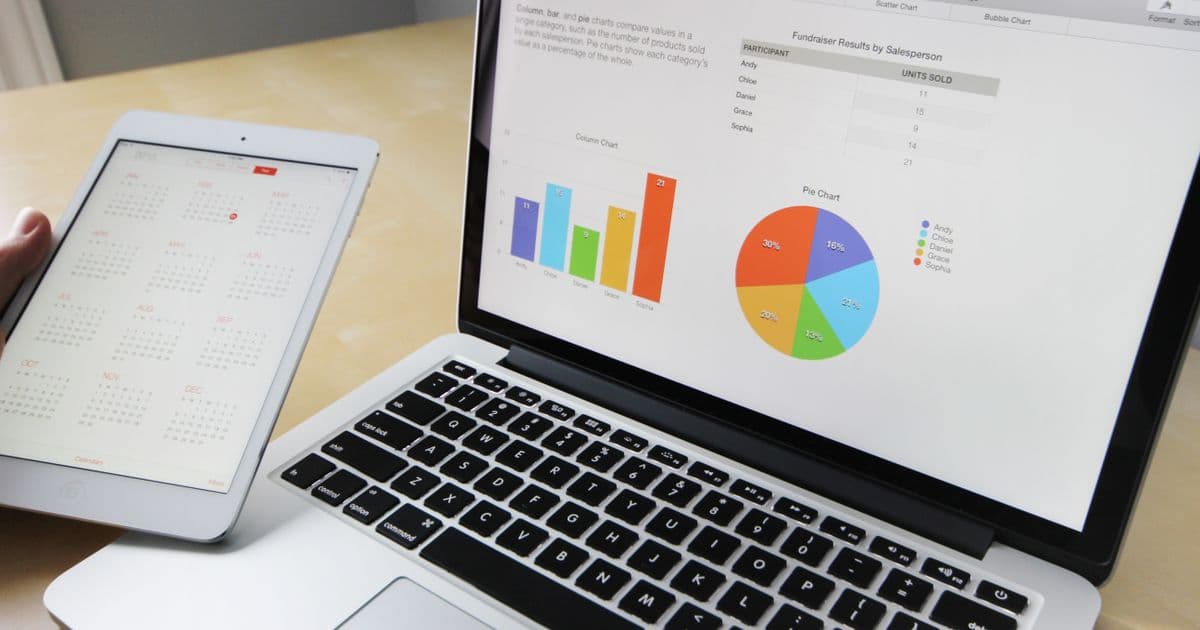
A conversion funnel is the visual representation of the journey a user follows from discovering your brand to completing a valuable action for your business. That action could be a purchase, a sign-up, a quote request or any other goal you have defined.
The "funnel" concept is no accident: at each stage of the process, some users drop off. Out of thousands of visitors who reach your website, only a percentage moves forward to the next phase. Understanding where and why those leaks occur is the essence of conversion optimisation.
Although they are often used interchangeably, there is an important difference. The sales funnel focuses on the commercial process: how the sales team manages leads, follows up and closes deals. The conversion funnel has a broader, more digital focus: it covers the entire user experience across your channels, from the first click to the final action.
In practice, the conversion funnel includes the sales funnel, but it also considers micro-conversions that happen long before a salesperson gets involved. If you want to go deeper into the commercial approach, we recommend our complete guide on the sales funnel.
The most widely used model divides the funnel into four phases, known by the acronym AIDA: Awareness, Interest, Desire and Action. Let us break down each one with a practical approach.
This is the moment the user discovers they have a problem or need and comes into contact with your brand for the first time. They may arrive through a Google search, a social media ad, a recommendation or a blog article.
Objective at this stage: capture attention and generate a positive first impression. It is not about selling, but about demonstrating that you understand the user's problem.
Common mistakes: slow landing pages, unclear value proposition, generic headlines that do not connect with search intent.
The user already knows you exist and starts to explore. They visit several pages, read content, compare options. This is the phase where you build credibility and demonstrate expertise.
Objective at this stage: keep the user in your ecosystem and nurture them with relevant information. This is where lead magnets, newsletters and educational content come into play.
Common mistakes: confusing navigation, lack of content that answers user questions, premature CTAs that ask for too much too soon.
The user has moved from "I am interested" to "I want it". They are evaluating whether your solution is the best option. They compare prices, read testimonials, look for guarantees.
Objective at this stage: eliminate objections and reinforce trust. Case studies, reviews, comparisons and demonstrations are key.
Common mistakes: lack of social proof, not addressing the most common objections, a complicated evaluation process.
The moment of truth. The user decides to convert: buys, signs up, requests a demo. All previous work converges here.
Objective at this stage: make conversion as simple as possible. Every unnecessary field in a form, every additional step in a checkout, is a potential barrier.
Common mistakes: forms that are too long, lack of payment options, not clearly showing final costs, absence of security signals.
Each funnel phase has its own indicators. Measuring correctly is the first step to optimising. This table summarises the most relevant metrics at each stage:
| Stage | Key metrics | Indicative benchmark |
|---|---|---|
| Awareness | Traffic, impressions, ad CTR, bounce rate | Organic CTR 3-5%, bounce < 60% |
| Interest | Pages per session, time on page, scroll depth, subscriptions | 2+ pages/session, > 2 min on page |
| Desire | Add-to-cart rate, content downloads, demo requests | Add-to-cart 8-12% (ecommerce) |
| Action | Conversion rate, average order value, cost per acquisition | Conversion 2-5% (general ecommerce) |
These benchmarks are indicative. What matters is not comparing yourself against the industry average, but establishing your own baseline and improving it iteratively.
A common mistake is obsessing only over the macro-conversion (the sale, the final sign-up) and ignoring everything that happens before. Micro-conversions are small actions that indicate the user is progressing through the funnel:
Measuring these micro-conversions allows you to identify exactly where leaks occur. If many users add to cart but few complete the purchase, the problem is between Desire and Action. If many reach the site but few get past the first page, the problem is in Awareness.
As we explain in our guide on how to improve your sales conversion rate, granular analysis of each point in the funnel is what separates optimising with purpose from making changes blindly.
Before optimising anything, you need to know what you have. Use analytics tools to reconstruct the real journey of your users. Do not assume they follow the path you designed. Analyse:
With the map in hand, look for abandonment patterns. Session recording and heatmap tools are especially useful here. Pay attention to:
You cannot fix everything at once. Use a prioritisation framework like ICE (Impact, Confidence, Ease) to decide what to optimise first. Generally, improvements in the final funnel stages (Desire and Action) have a more direct impact on results.
Every improvement should be framed as a testable hypothesis. "If we simplify the form from 8 fields to 4, we expect a 15% increase in completion rate because we reduce perceived friction."
Run A/B tests when you have sufficient volume. If you do not, apply sequential changes and measure the before/after impact with an adequate control period.
Funnel optimisation is not a project with an end date. It is a continuous process. Every test gives you new information. Every improvement can open new opportunities. The best CRO teams work in 2-4 week cycles, always prioritising the next experiment with the highest expected impact.
Attracting more traffic is pointless if the funnel has leaks. It is often more profitable to improve conversion in the final stages than to double the investment in acquisition.
A single funnel for all users is a dangerous oversimplification. Users arriving from organic search have a different intent than those coming from a remarketing ad. Segment by traffic source, device, user profile and previous behaviour.
The funnel does not end at the purchase. Retention, upselling and referral are equally important stages. A customer who returns has a much lower acquisition cost than a new one.
Changing the colour of a button because "green converts better" is not CRO. Every decision must be backed by quantitative data (analytics, tests) and qualitative data (surveys, interviews, recordings).
You do not need a complex tech stack to get started. With these tool categories you cover the essentials:
The key is not having many tools, but using them in a coordinated way to build a complete picture of the funnel.
If there is one thing that summarises the CRO philosophy applied to the conversion funnel, it is this: every point where users abandon is an improvement opportunity. The goal is not to eliminate all friction -- some friction may be necessary to filter unqualified leads -- but to eliminate unnecessary friction.
A form that asks for data you will never use, a checkout that forces account creation, a product page without social proof: these are barriers you can remove today and see results tomorrow.
If you want to optimise your conversion funnel with a systematic, data-driven approach, at Boost we are a consultancy specialising in conversion. We analyse each stage of your funnel, identify the highest-impact opportunities and design experiments that generate measurable results.
What a CRO consultant does, how it differs from an agency, required skills, working process and when it makes sense to hire one.
What dark patterns are, most common types, real examples, European legislation and ethical alternatives that improve conversion without deceiving users.
Discover what demand generation is, how it differs from lead gen and how to apply effective strategies to generate real demand for your business.