
optimizacion-conversion7 min read
CRO Consultant: Role and When to Hire
What a CRO consultant does, how it differs from an agency, required skills, working process and when it makes sense to hire one.

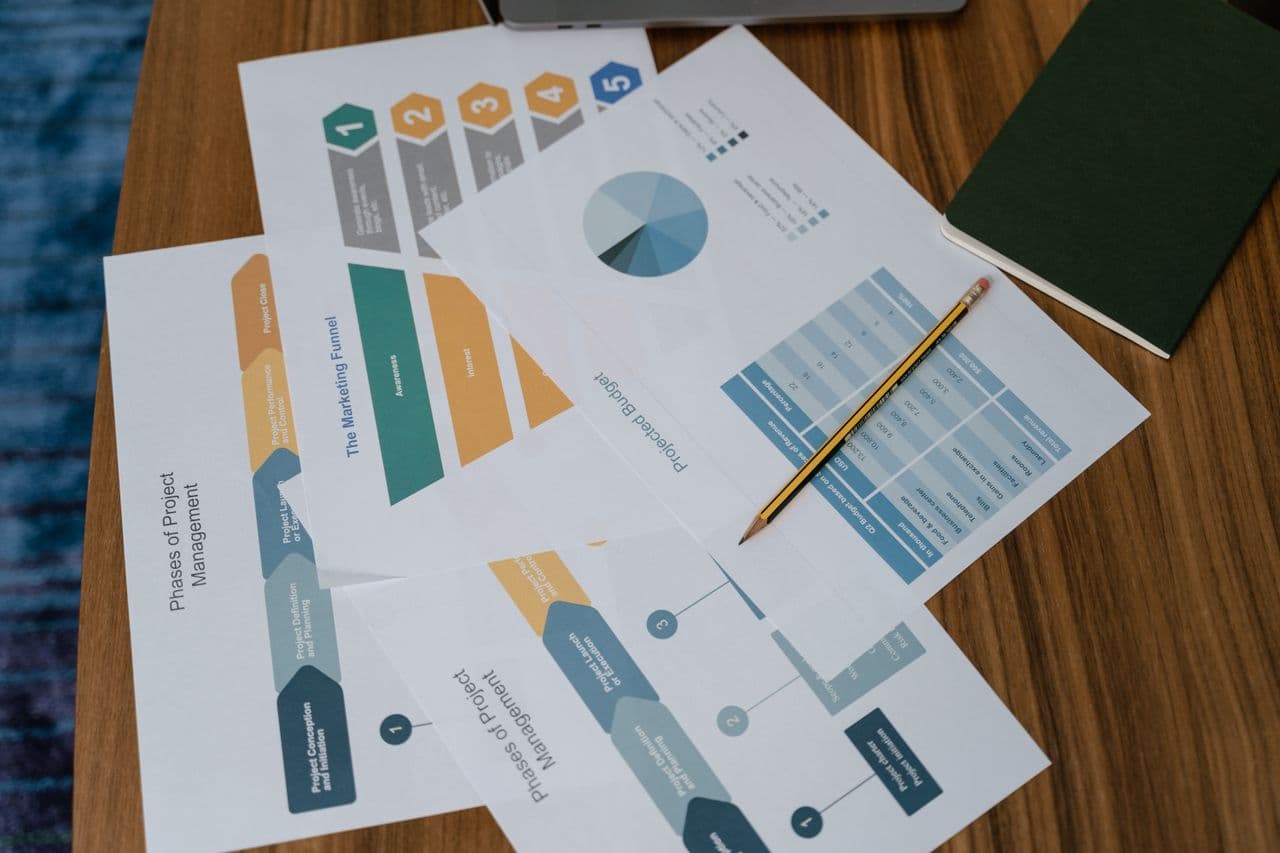
A sales funnel is the representation of the journey a user follows from discovering your brand to becoming a customer. It is called a funnel because at each stage the number of people decreases: many enter at the top, few reach the bottom.
This model is not new. It has existed since 1898, when Elias St. Elmo Lewis proposed the AIDA model (Attention, Interest, Desire, Action). But what has changed radically is how we apply it in digital environments, where every interaction is measurable and every stage is optimisable.
The most common mistake when talking about funnels is thinking that the solution to selling more is to push more traffic in at the top. The reality is that most digital businesses lose between 95% and 99% of their visitors before they convert. The problem is almost never volume; the problem is efficiency at each stage.
The funnel is divided into three major stages, each with different objectives, metrics and strategies.
| Stage | Name | Main objective | Key metric | Typical conversion rate |
|---|---|---|---|---|
| TOFU | Top of Funnel (Discovery) | Attract qualified visitors | Traffic, impressions, reach | 100% (entry point) |
| MOFU | Middle of Funnel (Consideration) | Generate interest and capture leads | Leads, engagement, time on site | 3% - 10% of TOFU |
| BOFU | Bottom of Funnel (Decision) | Convert leads into customers | Sales, close rate, AOV | 10% - 30% of MOFU |
At this stage the user does not know you or has a need they have not fully defined yet. Your goal is not to sell, but to capture their attention and build initial trust.
Typical TOFU content:
Metric that matters: it is not raw traffic volume, but quality. 10,000 visits from users with no purchase intent are worth less than 500 visits from your actual target audience.
Common TOFU mistake: investing heavily in attracting traffic without being clear about who you want to attract. Without targeting, the funnel fills with people who will never move forward.
The user already knows they have a problem and is evaluating options. Your job here is to position yourself as the best solution and capture their data so you can continue the conversation.
Typical MOFU strategies:
MOFU is where lead nurturing comes into its own. You cannot expect a user who downloaded an ebook to buy from you the next day. You need a communication sequence that educates, builds trust and moves the user closer to a decision.
Metric that matters: lead capture rate (visitors who leave their data) and lead quality (measured by lead scoring).
Common MOFU mistake: asking for too much information on forms. Each additional field reduces the conversion rate by 5% to 10%. Ask only for what you need to qualify and continue the conversation.
The user is ready to buy. They have compared options, consumed your content and trust your brand. Now they need the final push.
Typical BOFU tactics:
Metric that matters: close rate (leads that become customers) and average value per sale (AOV).
Common BOFU mistake: not having an optimised checkout or purchasing process. Poorly visible buttons, payment processes with too many steps, lack of payment options, confusing shipping information. These are details that seem minor but can destroy conversion at the most critical moment.
Measuring the funnel correctly is what separates teams that optimise from those that guess. These are the key metrics by stage and reference benchmarks.
| Metric | Stage | Average benchmark | What it indicates |
|---|---|---|---|
| Bounce rate | TOFU | 40% - 60% | Content relevance for the visitor |
| Time on page | TOFU/MOFU | 2 - 4 minutes | Engagement and content quality |
| Lead capture rate | MOFU | 2% - 5% | Effectiveness of lead magnets and forms |
| Email open rate | MOFU | 20% - 35% | Nurturing relevance |
| MQL to SQL | MOFU/BOFU | 15% - 30% | Qualification quality |
| Sales conversion rate | BOFU | 1% - 3% (e-commerce) | Effectiveness of the closing process |
| Cart abandonment | BOFU | 65% - 80% | Friction in the purchase process |
Funnel analysis is not about looking at each metric separately, but about identifying where the largest relative drop occurs. To do this:
Conversion rate optimisation (CRO) is not just for the checkout page. It applies to every funnel stage, with different techniques depending on the objective.
The concept is the same, but the execution changes significantly.
| Aspect | B2C | B2B |
|---|---|---|
| Cycle length | Minutes to days | Weeks to months |
| Decision-makers | 1 person | 3 - 7 people (committee) |
| Average ticket | Low to medium | Medium to high |
| Key MOFU content | Reviews, comparisons | Case studies, demos, whitepapers |
| Close | Self-service (checkout) | Sales rep (meeting, proposal) |
| Nurturing | Email + retargeting | Email + calls + LinkedIn + events |
In B2B, the funnel is longer and requires deeper content at each stage. Lead scoring is especially critical because you need to know when a lead is ready to be passed to the sales team. Passing a cold lead to sales burns the opportunity; holding a hot lead in marketing cools it down.
Users do not move in a straight line. They enter and leave, compare, come back, consult others. Your funnel must account for these movements and have re-entry points at each stage.
If marketing qualifies a lead as "hot" but sales disagrees, you have a definition problem. Both teams must agree on what an MQL is, what an SQL is and what the handover process looks like.
Pushing more traffic into the top of the funnel when your conversion rate is 0.3% is like filling a bucket with holes. First fix the holes (optimise the middle and final stages) and then scale the volume.
A funnel that is not measured cannot be optimised. And a funnel that is measured but not iterated on is just a nice dashboard. Establish fortnightly or monthly analysis cycles, identify bottlenecks and launch improvement hypotheses.
The best funnels include a post-sale stage that many overlook: retention and referral. A satisfied customer who buys again has an acquisition cost close to zero. A customer who recommends your product is your best acquisition channel.
Post-sale strategies that feed the funnel:
The sales funnel is not a theoretical concept. It is the practical tool that lets you understand where you lose customers and where the biggest growth opportunities lie. The key is not having the largest funnel, but the most efficient one.
And funnel efficiency is improved with data, hypotheses and experimentation. Exactly what CRO does.
Want to identify where your funnel breaks and how to fix it? At Boost, as a consultancy specialising in conversion, we analyse each stage of your funnel with real data, identify bottlenecks and design experiments to improve the conversion rate at every critical point. More revenue with the same traffic.
What a CRO consultant does, how it differs from an agency, required skills, working process and when it makes sense to hire one.
What dark patterns are, most common types, real examples, European legislation and ethical alternatives that improve conversion without deceiving users.
Discover what demand generation is, how it differs from lead gen and how to apply effective strategies to generate real demand for your business.