

estrategia-data-driven4 min read
Digital Marketing Agency: How to Choose Without Regrets
What to look for in a digital marketing agency, what services it should offer, red flags and why conversion is the metric that matters most.

Reinvent or die: the user experience and UX design sectors are betting on qualitative and quantitative research to face the current landscape. Carlos shared his perspective with us in a sincere, clear and friendly way. While he views the progress positively, he also raises critical questions about the challenges still ahead.
We are a strategic User Experience (UX) agency dedicated to accompanying large companies through innovation programs, digital transformation, user research and UX/UI design.
Last November (2022) we celebrated our tenth anniversary! I co-founded the agency together with Josep Maria. He studied fine arts and I studied computer engineering. We started collaborating as freelancers. Josep Maria focused on design, interaction and wireframing, while I focused more on front-end development and layout.
From the very beginning, we were clear about the value we wanted to convey: an emotional and humanistic value that transcends technology. We have always focused on designing people-centred solutions.
During the first 2 years, we probably only ran 2 tests. Back then, the value of qualitative research was not fully appreciated. The importance of involving people in research sessions through focus groups, design thinking and other methods was not yet recognised.
Working with Boost, we combine qualitative and quantitative research in projects. Qualitative and quantitative research should not live apart but complement each other.
We collaborate with Boost on various projects, working side by side with a strong connection. On our end, we bring a strategic vision grounded in qualitative information and in two merging disciplines: research and digital product design.
In the research field, we carry out strategic analysis and qualitative research. We use classic techniques such as interviews, workshops and design thinking methodologies, always working with people. We seek quality samples, being precise in the distinction between qualitative and quantitative analysis.
About three years ago, we started embracing data as a source of information. Data tells us what is happening, what problems exist and where they are. For example, if there is a high bounce rate, it is important to analyse the reasons behind it. That is where Interactius comes in — we research to understand and obtain the whys at a business level.
Furthermore, we have gradually trained ourselves internally and, in collaboration with Boost, we have learned to combine qualitative and quantitative research in projects. In fact, neither should live in isolation — they must complement each other.
We are in a more mature stage when it comes to qualitative and quantitative research. It is an exciting moment.
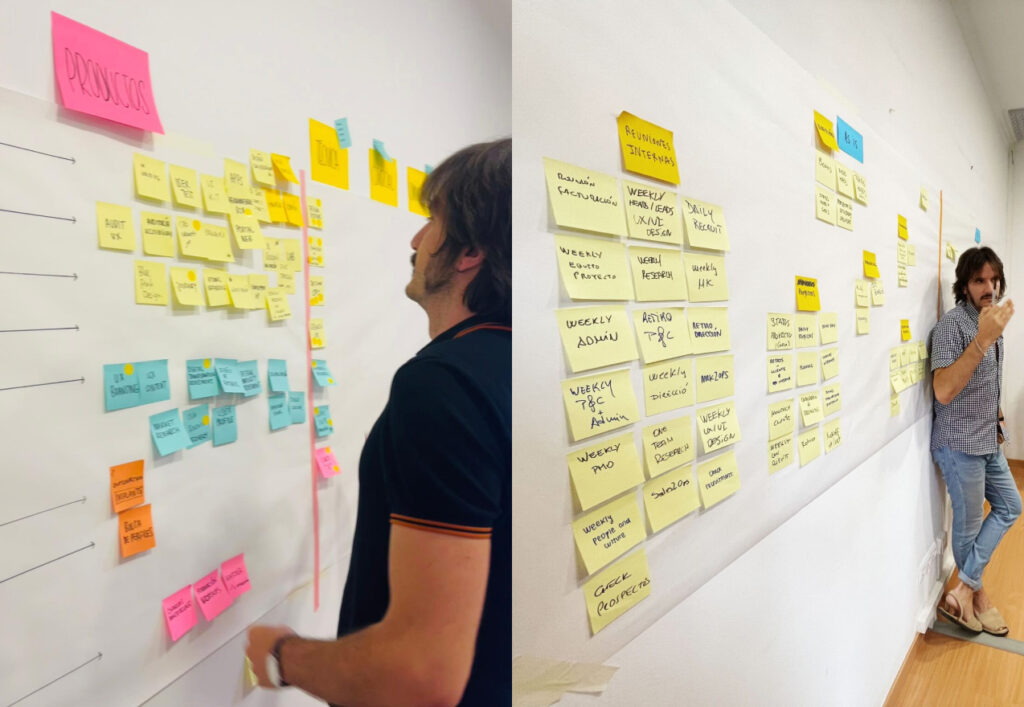
At first, it was difficult to convey the value of qualitative research. We wanted to emphasise that while data provides information, qualitative research provides an understanding of the whys. It was quite a challenge.
Now the discipline of UX research has experienced explosive growth. Large companies have dedicated teams that address both qualitative and quantitative aspects. It is now easier for many clients to understand. We are in a more mature stage when it comes to qualitative and quantitative research. It is an exciting moment.
An ideal project would be one where success depends on a transformation in the organisation's mindset to understand its value proposition and align it with its customers. Strategic design means understanding the current situation, existing strategies and openness to change. It involves immersing yourself in the culture and structure of the organisation, establishing basic pillars collaboratively and co-creatively, testing them with potential clients and adjusting the approach as needed. Designing a point of sale, an application, etc., are exciting challenges.
Not all companies are on the same page. A digital divide still persists.
In technical terms, collaborative work tools like MIRO, Figjam and Figma have changed the paradigm. Google has also contributed. These tools have transformed the way we work internally. Video calls are also fundamental.
Although we embrace collaboration, not all companies are on the same page. There is still a digital divide that persists. It is certainly a process similar to an iceberg: what you see on the surface is only part of the problem. Collaborative tools have displaced others like Photoshop, Illustrator and Sketch. These powerful tools make work easier and optimise time.
AI also helps optimise tasks. For example, if an AI technology can free researchers from tedious tasks, they can focus their energy on more tactical and creative approaches.
Despite the explosion in the industry, I feel that we are all failing to some degree. How is it possible that we are fragmenting the processes of qualitative and quantitative research so much, along with strategy? Specialisation is valuable, but it should not be excessive. If a designer does not understand research processes or a front-end developer refuses to accept that a button is not quite working, this creates a problem. The complexity is evident. The investment of time and money in research must generate confidence rather than scepticism. Some teams still do not recognise research as an essential part of the process.
What to look for in a digital marketing agency, what services it should offer, red flags and why conversion is the metric that matters most.
Everything you need to know before hiring an SEM agency: services, pricing, real metrics and how to ensure every euro in ads generates a return.
What to expect from a social media agency, how to measure the real ROI of social media and why likes don't pay the bills.