

optimizacion-conversion8 min read
Heuristic Analysis: UX Guide for Ecommerce
A practical guide to heuristic analysis for ecommerce: Nielsen's 10 heuristics, evaluation framework, downloadable checklist, and real-world examples.
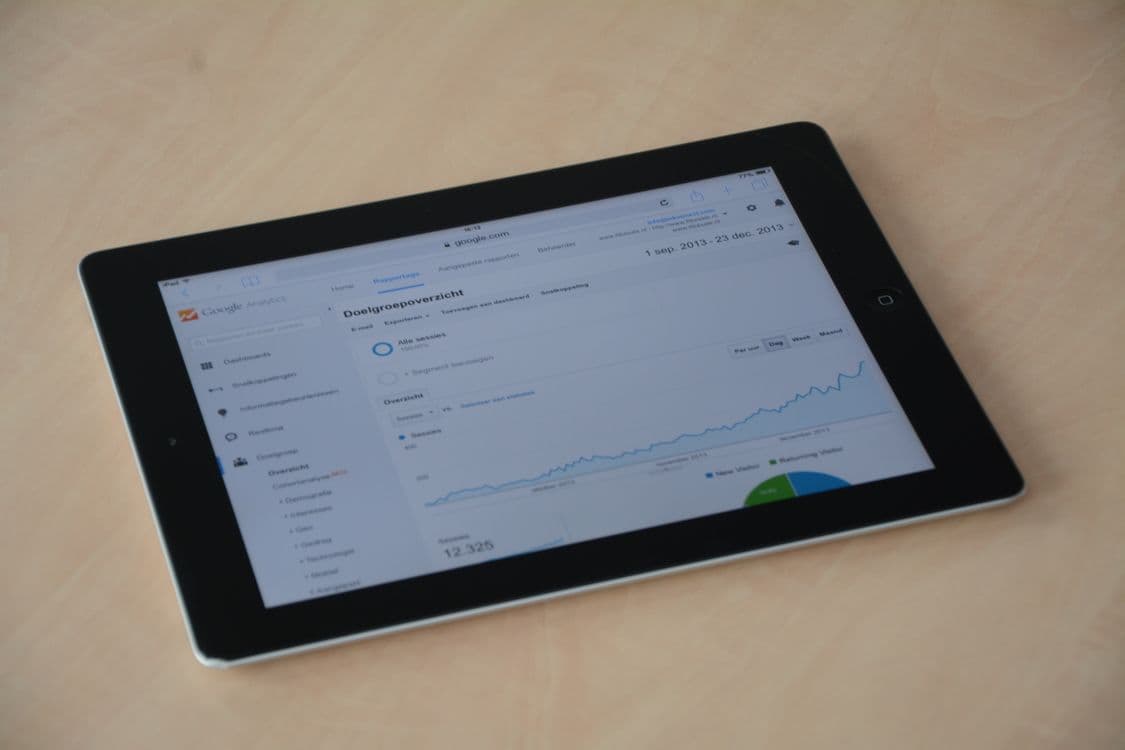
"We launched it because it seemed like a good idea" is the phrase that has cost digital marketing the most money. Not because intuition is useless, but because when you have data available and do not use it, you are making decisions with your eyes closed.
Data driven marketing is the practice of grounding every marketing decision in real data on behavior, performance, and context. Not on hypotheses, not on generic industry benchmarks, not on what the competition did.
Data driven marketing is an approach where decisions about what to communicate, to whom, when, and through which channel are made by analyzing customer, campaign, and behavioral data.
The difference from traditional marketing is the order of the process:
It does not mean creativity does not matter. It means creativity is deployed within a framework of evidence that increases the probability of it working.
Not all organizations are at the same point. Understanding which level your team is at is the first step toward advancing.
| Level | Characteristic | Typical symptom |
|---|---|---|
| 1. Reactive | Little measurement, done late | "We don't know what worked" |
| 2. Descriptive | Dashboards exist but are not acted on | "We have the data but don't use it" |
| 3. Analytical | Decisions are made based on historical data | "We optimize what already exists" |
| 4. Predictive | Models are used to anticipate behavior | "We act before churn occurs" |
| 5. Adaptive | The system learns and adjusts in real time | "Personalization is automatic" |
Most mid-sized companies are between level 2 and 3. The jump to level 3 requires less technology than it seems and far more cultural change.
Technology is the least of it. The biggest obstacle to data-based marketing is cultural: teams that distrust numbers, executives who prefer their instincts, processes that do not include data review in decision-making.
These are the levers that work for building a data driven culture:
The most common mistake is creating dashboards full of metrics that nobody looks at. Data is useful when it answers specific questions. The mindset shift is moving from "let's see how we are doing" to "we need to decide X — what data do we need to decide well?"
In a data driven culture, "we don't know yet" is a valid answer. The difference is that it is accompanied by "but we are going to test it." Teams that experiment frequently learn faster than those who seek the perfect answer before launching.
If only the data analyst can look at metrics, the organization cannot be data driven. Modern BI tools allow anyone on the marketing team to query data without writing SQL. That is a game changer.
Tool selection depends on maturity level and budget, but there is a minimum viable stack:
Web and product analytics: Google Analytics 4, Mixpanel, or Amplitude depending on product complexity. GA4 is the entry point for most.
Customer Data Platform (CDP): tools like Segment or RudderStack centralize behavioral data from multiple sources into a single customer profile. They are the bridge between data and personalization.
Experimentation: Optimizely, VWO, or Convert allow launching A/B tests and multivariate experiments with statistical rigor. Without an experimentation platform, data driven marketing is incomplete.
Visualization: Looker Studio (free), Metabase, or Tableau to transform data into actionable visual insights.
CRM with behavioral data: HubSpot, Salesforce, or Brevo to connect digital behavior with the sales cycle.
Having a lot of data does not make you data driven. Data volume is irrelevant if it is not transformed into actionable insights. An insight is an observation that implies a specific action: "40% of users abandon checkout at the address step" is an insight. "We have 10,000 daily sessions" is a data point.
Follower count, impressions, and likes are vanity metrics in most business contexts. Data driven marketing optimizes metrics that impact real results: conversion rate, cost per qualified lead, LTV, revenue per session.
Exploring data without a clear question generates analytical paralysis: there is always something else to look at. The correct process starts with the hypothesis ("we believe the lead generation form fails because it has too many fields") and then looks for data that confirms or refutes it.
An experiment that is stopped too early can lead to false conclusions. If an A/B test shows that variant B converts 15% better after 3 days and 200 visits, that is not statistically significant. Statistical discipline is part of data driven marketing.
Data that generates no action is a cost with no return. The complete cycle is: collect data → analyze → formulate hypothesis → experiment → learn → scale or discard → document the learning. Many teams do the first phases well but do not document learnings, so they repeat them.
Conversion rate optimization is, in essence, data-based marketing applied to the funnel. Each CRO experiment generates data that feeds back into marketing decisions: which messages resonate, which formats convert, which segments respond to which incentives.
The most mature marketing teams have integrated CRO and analytics as a single continuous improvement function for the funnel, from acquisition through to retention.
If you want to make the leap from intuition-based marketing to data-based marketing, with an experimentation methodology that generates accumulated learnings, our team can guide you through the process.
View CRO and experimentation servicesWant to know which data on your website is going untapped? Start with a free audit:
Audit your site for free with Scan&BoostAdrià Vidal is a conversion optimization and growth specialist at Boost. He works with digital companies to improve their activation, retention, and conversion rates through data-driven experimentation. Connect on LinkedIn
A practical guide to heuristic analysis for ecommerce: Nielsen's 10 heuristics, evaluation framework, downloadable checklist, and real-world examples.
UX writing for conversion: how to write microcopy, CTAs, error messages, forms, and interface text that guides users toward action. Techniques with real...
Complete guide to benchmarking: what it is, the 4 main types, a step-by-step process, and how to compare your conversion rates with your industry...