

analitica-digital5 min read
Eye Tracking in Marketing: Where Your User Looks
Eye tracking shows you exactly where users look on your website. Learn how to use it to improve user experience and increase conversions.
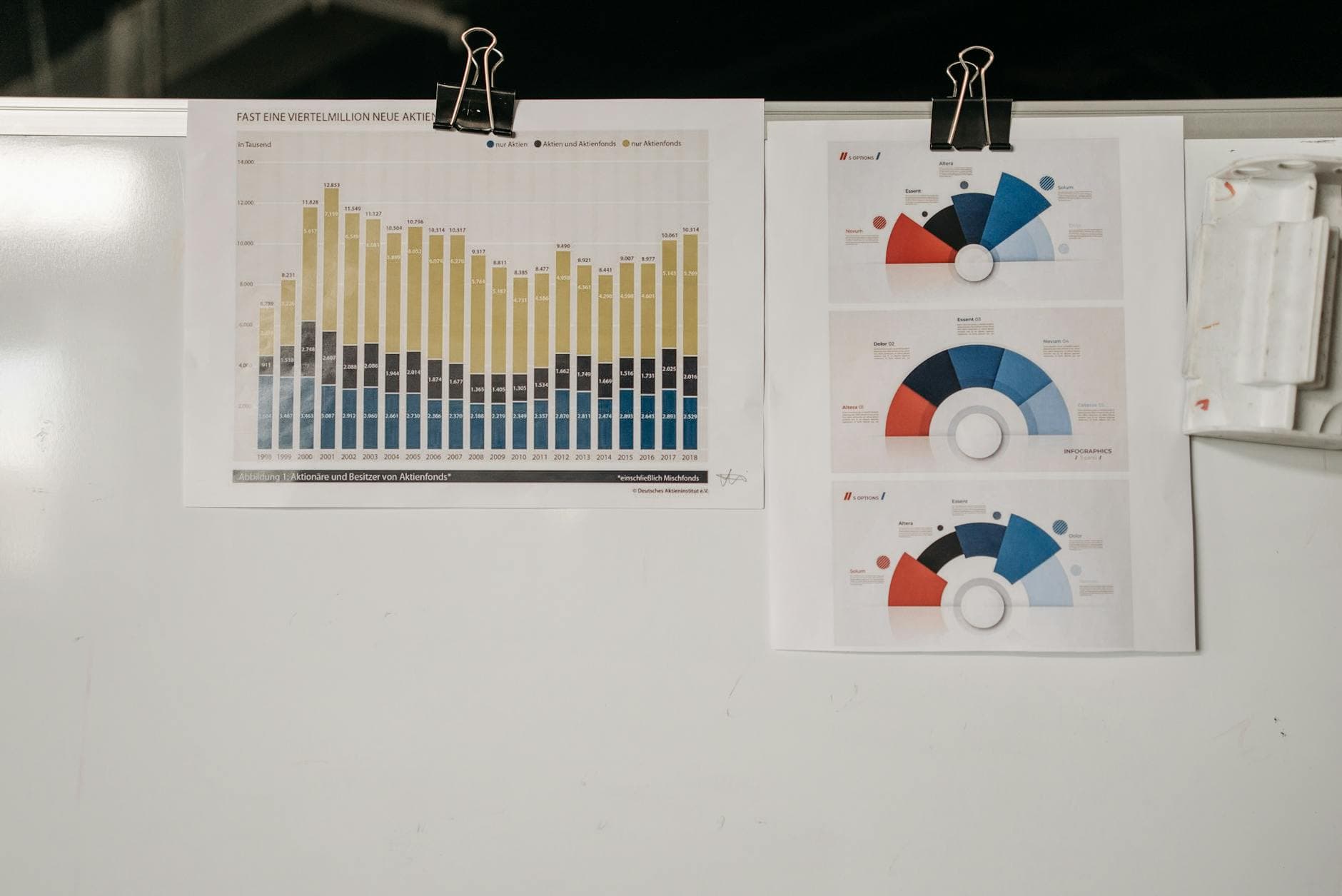
Making more strategic, well-founded decisions is something that features on every digital business's wish list for 2025. We all want to start the year with more order, clearer ideas, and decisions that truly have an impact on our business. The challenge is making sure it does not remain merely a good intention.
2025 will be a year that is hard to anticipate. We are barely a few weeks in and the world has already shifted considerably. Faced with such an unpredictable landscape, we only have one option: resilience. Or in other words: solid preparation so we can respond quickly — and correctly — to whatever comes next.
Check out our complete Report on 2025 Trends and discover how to turn your data into impactful business decisions.
The only way to ensure your business can respond to any change in demand or supply of your services is through total control of the situation and good visibility of what is happening. Having a clear picture is the solution to responding in time.
In this article we will talk precisely about that: good data visualization so your business can be agile enough to make good decisions based on quality information. And for that, you need a good dashboard.
Digital businesses navigate a sea of data. We live in the information age and all companies handle enormous amounts of data about their customers and the sector in general. But in many cases, that information is not transformed into useful actions for the business.
Data visualization dashboards are precisely that bridge connecting data with actionable insights that allow you to make decisions that have an impact on your business. A good data visualization enables you to connect different metrics with each other and turn loose figures into clear information about your business's situation.
Beyond reflecting reality, a good dashboard also lets you get ahead of it. In an environment as constantly changing as ours, having data visualization that is capable of identifying trends in your business — and in the sector in general — is also indispensable.
Having the situation under control and being able to identify changes and trends in time is useful for any business. But having a good dashboard also brings advantages for the day-to-day running of your business in more specific ways. In fact, thanks to data visualization you can improve key aspects of your operations:
Optimized logistics — Customers are increasingly demanding and efficient operations are key to ensuring the survival of any business. And in such a changing environment, your logistics can fluctuate at any moment. That is why a clear dashboard will allow you to respond to problems in real time and make quick decisions.
More precise evaluation — 2025 will be another year of innovations. AI, Augmented Reality, social commerce... And if you are considering investing in any of them, you will need to evaluate their results in an agile and efficient way. Thanks to good data visualization you will be able to easily determine which innovation has a real impact on your key metrics.
ROI always on the table — No more shooting in the dark. In addition to deciding which innovations to invest in, you will also have a clearer picture of which marketing (or business) actions are delivering results. Optimizing your ROI is easier when you can attribute sales to every decision you make.
All right, so it is clear then, right? You build a dashboard with all the data you have available and everything is sorted. Wait, because it is not that simple. Not just any dashboard will do. In fact, one of the most common mistakes is relying on data visualization that is too generic and does not adapt to your business. So here is how to improve that:
→ Question to answer: Does my data sync with itself, or am I missing something?
→ Question to answer: If something changes in my business, does this dashboard still reflect reality and remain useful?
Ultimately, your data visualization must meet 3 requirements: be useful to your business, be up to date, and be able to adapt to incoming changes. If you have a dashboard that meets those three criteria, you are ready for 2025. And if not, here is what you can do:
Choose the most important metrics — Focus on the KPIs most relevant to your business and aligned with the goals you have set for 2025. Often it is worth designing a dashboard focused on key issues without overcomplicating things.
Automate alerts and notifications — The great thing about a dashboard is that, if well designed, it should be able to identify changes and trends without you needing to check it constantly. To get more out of it, set up key alerts for your business.
Regularly review the dashboard design — An adaptable and flexible dashboard also depends on you. That is why you need to make sure you frequently review whether the data visualization your business has is still useful. The key is continuously adapting it to your needs.
Your business deserves a dashboard equal to whatever 2025 has in store. A dashboard that is useful, flexible, and agile enough to respond in time to all the changes, surprises, and trends of the new year.
For now, you can review the 5 trends we have gathered in our report and start thinking about how they might affect your business. And then, contact us to start designing a data analysis and visualization strategy that truly generates an impact on your business and helps you be more strategic.
Eye tracking shows you exactly where users look on your website. Learn how to use it to improve user experience and increase conversions.
Discover what a data-driven strategy is, what it means to be a data-oriented company, and how to implement it step by step using tools like GA4,...
Don't trust your data? Discover what to review in your digital analytics audit to successfully start doing CRO. Introducing Scan&Boost: your complete...